Why Go Solar in Nigeria? Benefits of Choosing an SRNE Solar Solution
For many Nigerian homes and businesses, electricity is not simply a monthly bill. It affects how comfortably families live, how reliably businesses serve customers, how long equipment lasts, and how much money disappears into fuel and generator maintenance.
Solar power gives you a practical way to take greater control of your energy supply. Instead of depending completely on public electricity or a generator, a well-designed solar system uses daylight to produce electricity and stores excess energy for use when you need it.
An SRNE Solar solution can bring the key parts of this system together: solar panels that generate power, an inverter that makes it usable, batteries that store it, and controls that help manage how the system works. The result is a more reliable, quieter, and better planned approach to electricity for Nigerian households and businesses.
Why Solar Power Makes Sense in Nigeria
Nigeria receives abundant sunshine for much of the year, which makes solar energy a useful power source for homes, offices, shops, schools, clinics, and other facilities. While solar is not a one-size-fits-all solution, it can reduce dependence on generators and provide backup when grid supply is unavailable.
The value of solar goes beyond switching on lights during an outage. A properly sized system can support important appliances, help manage energy costs, and give you more confidence in your daily routine.
The International Energy Agency reports that electricity access in Nigeria reached 71% in 2024, but access alone does not always mean dependable supply. Solar and battery storage can help households and businesses build a more reliable source of electricity around their own needs. Read the IEA Electricity 2026 report
Reduce Your Dependence on Fuel and Generators
Spend less time and money managing generator power
Generators can be useful, but the ongoing costs add up. Fuel, oil changes, repairs, noise, fumes, and unexpected faults all take money and attention. For a business, a generator problem can interrupt sales, customer service, production, or security. At home, it can make everyday life more stressful.
Solar power gives you another source of energy. During daylight hours, your solar panels generate electricity. When connected to a battery storage system, excess power can be stored for evening use or for periods when the grid is unavailable.
This does not mean every solar system eliminates the need for a generator immediately. The right outcome depends on your electricity demand, battery capacity, solar panel size, and budget. However, a carefully designed solar solution can substantially reduce generator run time and help you use fuel more selectively.
Enjoy quieter and cleaner power
A solar system operates without the constant sound and exhaust associated with a fuel generator. This makes a noticeable difference in homes, schools, clinics, offices, and places of worship where noise can affect comfort, concentration, and customer experience.
Solar power also produces electricity without burning fuel at the point of use. For families and businesses that want to lower their environmental impact while improving power reliability, this is a meaningful advantage.
Get Reliable Power When You Need It Most
Keep essential appliances running during outages
The most valuable solar system is not necessarily the biggest one. It is the one designed around the appliances and activities that matter most to you.
For a household, those priorities may include lighting, fans, televisions, internet equipment, refrigerators, security systems, and selected sockets. For a business, they may include point-of-sale systems, computers, lighting, refrigeration, security cameras, small machinery, or essential communications equipment.
With a hybrid solar system, solar panels, batteries, and the grid can work together. The system can use solar power when it is available, store energy for later, and draw from another source when necessary. This creates a more flexible power arrangement than relying on one source alone.
Protect productivity and customer service
A power interruption may look small, but its effects can spread quickly. A shop may lose sales when its payment terminal or lighting goes off. A salon may delay appointments. An office may lose internet access and working hours. A clinic may need continuous power for essential equipment.
Solar storage helps businesses plan for these moments. Instead of waiting for power to return or immediately starting a generator, the battery can support selected loads according to the system design. This helps protect productivity and gives customers a more dependable experience.
How an SRNE Solar Solution Works
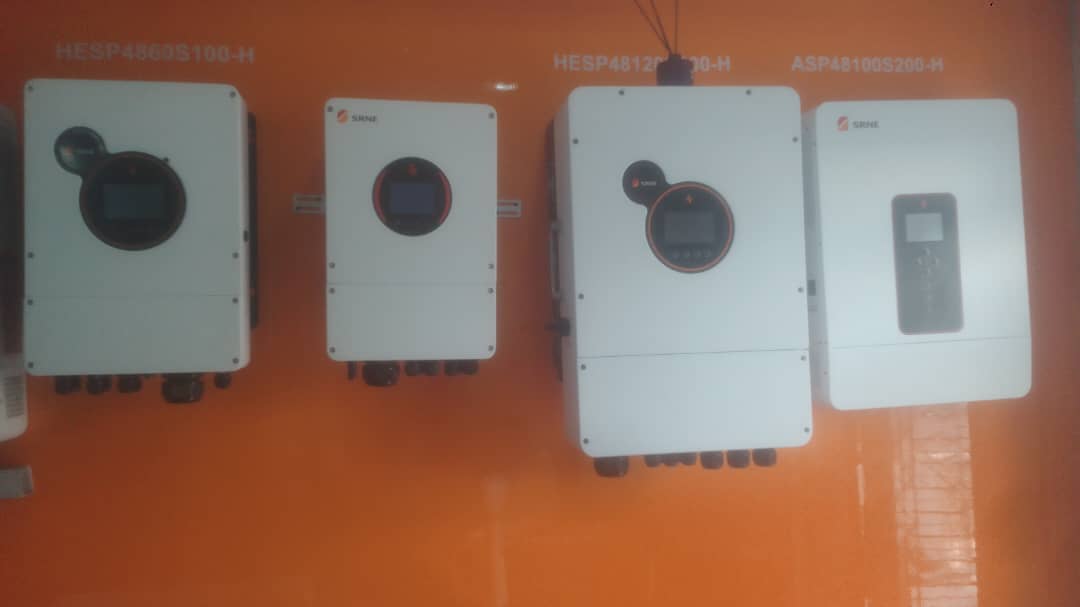
SRNE’s product portfolio includes hybrid and off-grid inverters, lithium battery storage systems, solar charge controllers, and larger commercial energy storage equipment. These products are designed to help solar panels, storage, and household or business loads work as one system. Explore SRNE energy storage solutions
Solar panels generate electricity
Solar panels capture sunlight and convert it into direct-current electricity. The quantity of electricity produced depends on the panel capacity, installation angle, shading, weather, and available sunlight.
Panels are important, but they are only one part of the system. Their output needs to be managed and converted into electricity that your appliances can use.
The inverter turns solar energy into usable power
The inverter is the working centre of a solar system. It converts the electricity generated by the panels into alternating-current power for appliances. In a hybrid system, it can also coordinate energy from the panels, battery, and grid.
SRNE offers residential hybrid inverter ranges for systems that combine solar generation with battery storage. The correct model depends on your total appliance load, expected peak demand, voltage requirements, and future expansion plans. See SRNE residential hybrid inverter options
Batteries store power for later
Solar panels produce the most energy during the day, but many people need electricity in the evening or during overnight outages. That is where battery storage becomes essential.
A battery stores excess solar electricity so it can be used later. Battery capacity is measured in kilowatt-hours, while the inverter’s rating affects how many appliances can run at the same time. Both matter. A large battery with an undersized inverter may not support all the loads you expect, while a powerful inverter with too little battery storage may not provide enough backup time.
SRNE’s energy storage range includes lithium iron phosphate battery systems and integrated storage options for residential and commercial applications. View SRNE solar storage systems
Benefits of Choosing an SRNE Solar Solution
Build a coordinated energy system
When a system is designed with compatible components, it is easier to understand, install, and maintain. SRNE provides equipment for solar generation management, battery storage, and power conversion, which can make it simpler for an installer to develop a coordinated solution around your needs.
This is especially important because solar systems should never be assembled based only on the lowest available price. The inverter, batteries, panels, charge controller, protective devices, cables, and mounting structure all need to match the intended use.
Choose a solution that can grow with your needs
Your electricity needs may change over time. You may add more appliances, expand your business, move into a larger building, or decide you need longer backup during outages.
Some SRNE storage systems are designed with expansion in mind. For example, SRNE’s EOH energy storage system offers battery configurations that can be expanded through parallel connection within its stated specifications. Read the SRNE EOH system details
Expansion should always be planned by a qualified installer. It is important to confirm the inverter model, battery configuration, panel capacity, and electrical protection requirements before adding more equipment.
Support residential and business applications
A family may need a modest system for lights, fans, a refrigerator, television, and internet. A growing business may need a more powerful setup for daytime operations, refrigeration, computers, security, or equipment with motor loads.
SRNE’s product range includes solutions for residential systems as well as commercial and industrial energy storage applications. This gives buyers a path to choose equipment based on their actual power needs instead of forcing every user into the same type of system.
Manage power more intelligently
A modern solar storage system can be configured to use different energy sources at different times. For example, the system may prioritise solar generation during the day, charge the battery with available solar energy, and reserve battery power for an outage or evening use.
The exact settings and functions depend on the SRNE model and the system design. Ask your installer to explain how your system will prioritise solar, battery, grid, and generator power. Understanding this before installation helps you use the system effectively from the first day.
What Solar Can Power in Your Home or Business
Solar for homes
A solar system can support common household essentials when it is sized correctly. These may include lights, fans, televisions, internet routers, laptops, refrigerators, security devices, and selected appliances.
High-power appliances require special planning. Air conditioners, electric cookers, pressing irons, water heaters, pumping systems, and multiple refrigerators can increase the system size and cost considerably. This does not mean they cannot be included; it means they should be clearly listed during the load assessment.
The best first step is to identify your essential loads. Think about what must remain powered during a blackout, how many hours you need backup, and which appliances can be used only when solar production is strong.
Solar for shops and small businesses
For shops, salons, pharmacies, restaurants, offices, and small production businesses, dependable electricity can protect income. A well-designed solar system can support lighting, payment systems, computers, routers, cameras, fans, refrigerators, and other essential loads.
The right design should account for the hours your business operates. A business that works mainly during the day may benefit strongly from direct solar generation, while a business that operates late into the night may need more battery storage.
Solar for larger commercial operations
Larger facilities require more detailed planning. Equipment such as industrial machines, large pumps, cold rooms, air-conditioning systems, data equipment, and three-phase loads need an experienced installer to assess load patterns, peak demand, and backup requirements.
SRNE offers commercial and industrial energy storage options alongside its residential range. A proper assessment can help determine whether a hybrid, storage-focused, or phased approach is suitable for the facility.
How to Choose the Right SRNE Solar System
Start with a load assessment
Do not begin by asking only, “How many panels do I need?” First, list every appliance or machine you want to power. Include its wattage, quantity, and daily hours of use.
A good assessment considers two separate questions:
- How much energy do you use in a day?
- How much power do you need at one time?
The first question helps determine panel and battery capacity. The second helps determine inverter size. Both are essential to a solar system that performs as expected.
Be realistic about backup time
Think carefully about your backup target. Consider whether you need enough energy for a few hours each evening. You may also want essential appliances to run overnight. If you run a business, think about whether you need it operate throughout a long outage.
Longer backup periods normally require more battery storage. A clear backup target helps you avoid choosing a system that is too small or unnecessarily expensive.
Check your roof and site conditions
Your installer should inspect the roof or installation space for shade, structural condition, access, orientation, cable routes, and safety. Shade from trees, neighbouring buildings, water tanks, or other structures can reduce panel output.
A quality installation also includes suitable mounting, correct cable sizing, earthing, and protective devices. These details may not be as visible as panels and batteries, but they contribute to safety and system reliability.
Ask for an itemised quotation
A trustworthy quote should state the exact panels, inverter, batteries, mounting materials, cables, protection equipment, installation work, warranty terms, and after-sales support.
If the quotation includes SRNE equipment, ask for the precise model numbers and data sheets. This lets you confirm the equipment’s capacity and discuss any questions with the supplier or installer before you make a decision.
Choose Quality, Support, and Proper Installation
A solar system is a long-term investment. The cheapest quotation is not always the best value if it uses mismatched equipment, leaves out key safety components, or offers no meaningful support after installation.
Choose a supplier who can explain the design in simple terms. You should know what the system can power, how long it can provide backup, how you should operate it, what the warranty covers, and who to call if you need help.
HM Solar distributes SRNE products in Nigeria and can help you explore available SRNE inverters, batteries, charge controllers, and energy storage options. Before purchase, request current availability, exact specifications, warranty details, and a recommendation based on your actual energy requirements.
Make the Move to Smarter, More Reliable Power
Going solar in Nigeria is about more than installing panels on a roof. It is about gaining more control over how your home or business uses electricity. It can help reduce generator dependence, protect important appliances and activities during outages, create a quieter environment, and support a better long-term energy plan.
An SRNE Solar solution brings together the equipment needed to generate, convert, store, and manage solar power. When an installer designs the system around your real electricity needs and installs it professionally, it can provide dependable value for years.
Ready to explore the right SRNE solar solution for your home or business? Call or WhatsApp HM Solar on 08034490636 to discuss your appliances, backup needs, and budget, and get guidance on a system that fits the way you use power.