Solar System: A Complete Guide to Solar Power Solutions in Nigeria
As the demand for reliable electricity continues to grow, more homeowners and businesses are exploring ways to generate, store, and manage their own power. A solar system can provide an alternative source of electricity by using energy from the sun and depending on the system design, storing that energy for later use.
However, choosing a solar system is not simply about buying solar panels. A complete system can involve solar panels, an inverter, batteries, charge controllers, energy management technology, and other components that work together to provide usable electricity.
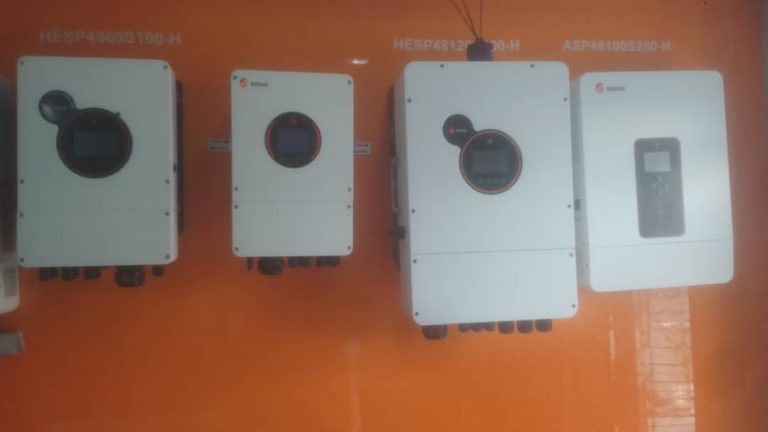
For homes and businesses looking for dependable solar energy solutions, SRNE provides a range of products covering solar inverters, energy-storage batteries, solar charge controllers, and larger energy-storage systems. Its product range includes residential hybrid and off-grid solutions as well as commercial and industrial energy-storage solutions.
In this guide, we will explain what a solar system is, how it works, the major components involved, the different types of systems, and how SRNE’s solar energy solutions fit into the picture.
What Is a Solar System?
A solar system is a group of electrical components designed to capture solar energy and convert it into usable electricity.
The basic process starts with solar panels. Solar panels capture energy from sunlight and produce direct current (DC) electricity. An inverter can then convert that electricity into alternating current (AC), which is used by many household and business appliances.
A solar system can also include batteries that store excess energy for use when solar production is low, such as at night or during periods of limited sunlight.
Depending on the design, a solar system may operate with the electricity grid, independently from the grid, or combine solar energy, batteries, and grid electricity.
This means that a solar system can be designed around different energy needs rather than being a one-size-fits-all solution.
How Does a Solar System Work?
Understanding how a solar system works makes it easier to choose the right equipment.
A typical solar energy system follows several basic stages.
1. Solar panels capture sunlight
Solar panels are installed where they can receive sunlight. They convert solar energy into DC electricity.
The amount of electricity generated depends on factors such as the size and number of panels, available sunlight, panel orientation, and the overall system design.
2. The solar energy is managed
The electricity generated by the solar panels needs to be managed before it can be used or stored.
Depending on the system, a solar charge controller or an inverter with built-in solar charging and MPPT technology can manage the energy coming from the solar panels.
MPPT, or Maximum Power Point Tracking, is a technology used to help a solar system obtain energy efficiently from the solar array.
SRNE offers solar charge controllers as well as inverter products with solar charging and MPPT capabilities. Its product catalogue includes both charge-only and charge-and-discharge solar controllers.
3. The inverter converts electricity
The inverter is one of the most important components in many solar systems.
Solar panels produce DC electricity, while many household and commercial appliances use AC electricity. The inverter helps convert DC electricity into usable AC electricity.
Modern solar inverters can also perform additional functions, including managing battery charging, coordinating different energy sources, and controlling how electricity is supplied to loads.
SRNE offers several categories of inverters, including residential hybrid inverters and residential off-grid solar-storage inverters. Its official product listings include different power ranges and configurations for different applications.
4. Batteries store energy
A solar battery stores electrical energy so that it can be used later.
For example, during the day, solar panels may produce more electricity than a home is using. Instead of allowing that excess energy to go unused, a compatible solar system can store it in a battery.
The stored energy can then be used when solar production is lower.
SRNE offers several lithium energy-storage battery ranges. Its official product catalogue includes low-voltage lithium batteries such as the EOS, SE, EOC, and SF series, with different capacities and configurations.
5. Electricity is supplied to your appliances
Once electricity has been generated, converted, and managed, it can be supplied to connected appliances and equipment.
The exact configuration depends on the type and size of the solar system and the user’s energy requirements.
Main Components of a Solar System
A complete solar system can contain several important components.
Solar Panels
Solar panels are responsible for capturing energy from sunlight.
The number and capacity of panels required depend on the energy requirements of the property and the overall system design.
Solar Inverter
The inverter converts electricity and can also manage energy flowing between solar panels, batteries, the grid, and connected loads depending on the inverter type.
SRNE offers hybrid and off-grid solar-storage inverters across different power ranges. Its residential energy-storage solutions include hybrid inverters designed to work with battery storage.
Solar Batteries
Batteries store energy for later use.
SRNE’s battery portfolio includes lithium energy-storage products with different capacities. For example, its low-voltage battery range includes LFP products from the EOS, SE, and SF series.
Solar Charge Controller
A charge controller helps regulate electricity going from solar panels to a battery.
SRNE offers both MPPT and other solar charge-controller solutions for different applications.
Mounting, Cables and Protection Equipment
A complete installation may also require mounting structures, cables, switches, breakers, protection devices, and other installation accessories.
These components are important because a solar system is not only about the major equipment. Proper installation and system design also matter.
Types of Solar Systems
There are several major types of solar systems.
1. On-Grid Solar System
An on-grid solar system is connected to the electricity grid.
Solar energy can be used during periods of solar production, while grid electricity can provide additional power when necessary.
The exact operation depends on the equipment, local regulations, and system design.
2. Off-Grid Solar System
An off-grid solar system operates independently of the utility grid.
These systems typically combine solar generation, battery storage, and an inverter to provide electricity without depending on a grid connection.
This can be useful for locations where grid electricity is unavailable or unreliable.
SRNE offers dedicated off-grid solar-storage solutions, including products in its AEP, ASP, AFP, ABP, HYP, and HF series.
3. Hybrid Solar System
A hybrid solar system combines solar energy with battery storage and can also interact with the electricity grid.
One of the advantages of this approach is flexibility. Energy can be generated from solar panels, stored in batteries, and managed alongside grid electricity according to the system configuration.
SRNE’s residential energy-storage portfolio includes hybrid solar-storage inverters designed for different residential applications.
Solar System for Homes
A solar system for a home should be designed around the household’s actual electricity needs.
Before choosing equipment, homeowners should consider questions such as:
- How much electricity does the home use?
- Which appliances need to remain powered during an outage?
- How many hours of backup power are required?
- Is battery storage required?
- Is the system intended to reduce grid dependence?
- Will the household’s energy demand increase in the future?
A small home with basic energy requirements will have different needs from a larger home running refrigerators, televisions, computers, pumps, air conditioners, and other high-power appliances.
SRNE’s residential energy-storage solutions combine solar-storage inverters, lithium batteries, and energy-management technologies. In SRNE, these systems are designed to help households increase solar self-consumption, provide backup power during outages, and manage stored energy.
This makes proper system sizing important. Instead of choosing equipment simply because it has a particular power rating, homeowners should consider their complete energy requirements.
Solar System for Businesses
Businesses can have significantly different energy requirements from homes.
A small office, retail shop, restaurant, school, workshop, or larger commercial facility may require different levels of power and energy storage.
For businesses, a solar system can be designed to support important electrical loads, manage energy storage, and provide greater control over how electricity is used.
SRNE also provides commercial and industrial energy-storage solutions. Its current C&I portfolio includes high-power hybrid inverters, high-voltage batteries, and integrated energy-storage systems. SRNE’s C&I materials list solutions such as the IESP series, Ket-A/Ket-B/Ket-C high-voltage battery ranges, and BOX energy-storage systems.
This demonstrates that solar and energy-storage solutions are not limited to residential applications.
What Makes SRNE Solar Solutions Different?
When choosing solar equipment, it is important to look beyond the word “solar.”
Different components need to work together properly, and the equipment needs to match the application.
SRNE’s product ecosystem covers multiple parts of a solar and energy-storage system.
Its current product categories include:
- Residential hybrid inverters
- Residential off-grid inverters
- Commercial and industrial storage inverters
- Lithium energy-storage batteries
- High-voltage energy-storage batteries
- Low-voltage batteries
- Solar charge controllers
- Integrated energy-storage systems
- Commercial and industrial energy-storage systems
- RV solar products and accessories
This range allows different system configurations to be built around residential, commercial, industrial, and other applications.
SRNE Hybrid Solar Inverters
Hybrid inverters are particularly important in solar-storage systems because they can coordinate multiple energy sources.
SRNE’s residential portfolio includes HESP hybrid solar-storage inverters in different configurations and power ranges. Its official HESP models range from smaller residential capacities through higher-power configurations.
The appropriate inverter depends on factors such as the property’s electrical demand, battery configuration, solar array, voltage requirements, and installation design.
For that reason, customers should not choose an inverter based on price or power rating alone.
SRNE Lithium Energy-Storage Batteries
Battery storage is an important part of many modern solar systems.
SRNE’s battery portfolio includes lithium-based energy-storage products across several series and capacities.
For example, SRNE’s current low-voltage battery catalogue lists:
- EOS 2.56kWh
- EOS 5.12kWh
- EOS 7.16kWh
- EOS 10.24kWh
- EOS 16.07kWh
- SE 5–15kWh
- SF 5.12–30.10kWh
- EOC 5.12kWh
The exact capacity and configuration available depend on the product series.
Some SRNE battery products also support expansion through parallel connections. For example, documentation for the SE series states that the batteries can be expanded through parallel connection and use lithium battery technology.
This type of flexibility can be useful when energy requirements change over time.
How to Choose the Right Solar System
Choosing the right solar system requires more than simply asking, “How many panels do I need?”
Consider these factors:
1. Your Energy Consumption
List the appliances and equipment you want to power.
Consider their wattage and how long they operate each day.
2. Your Backup Requirements
Do you need backup for only essential appliances, or do you want to support most of the property?
The answer affects the required inverter and battery capacity.
3. Your Solar Generation
The solar panels must be appropriately sized to generate the energy required by the system.
4. Battery Capacity
If you need electricity after sunset or during outages, battery capacity becomes particularly important.
5. Inverter Capacity
The inverter must be capable of handling the electrical loads connected to it.
6. Future Expansion
It can be useful to consider whether your energy needs may increase in the future.
7. Professional Installation
A solar system should be properly designed and installed using compatible components.
The wrong combination of equipment can reduce performance or create electrical and safety problems.
Common Mistakes When Buying a Solar System
One of the biggest mistakes is choosing a system based only on the number of solar panels.
A solar system is made up of multiple components, and they need to work together.
Another mistake is choosing an inverter that cannot adequately support the required loads.
Some buyers may also underestimate battery requirements because they focus only on daytime solar production.
Finally, customers should be careful about buying equipment without confirming compatibility, specifications, warranty conditions, and installation requirements.
A professional solar provider or qualified installer can help determine the appropriate system configuration.
Is a Solar System Worth Considering in Nigeria?
For homes and businesses that need greater control over their electricity supply, solar energy can be an important option to consider.
The value of a solar system depends on factors such as electricity consumption, grid reliability, fuel costs, equipment costs, installation requirements, and the amount of energy that needs to be backed up.
A properly designed system can help users make greater use of solar energy, store energy for later use, and reduce dependence on a traditional electricity supply.
For some users, the priority may be backup power. For others, it may be reducing grid dependence or making better use of renewable energy.
There is therefore no single solar system that is perfect for every home or business.
Why Choosing the Right Solar Brand Matters
Solar equipment is expected to operate for years, so the decision should not be based solely on the cheapest initial price.
Customers should consider product specifications, compatibility, system design, battery technology, warranty terms, after-sales support, and the experience of the installer.
SRNE’s product operates across residential solar, energy storage, off-grid solutions, and commercial and industrial applications. Its official materials currently list a broad range of inverter, battery, charge-controller, and energy-storage products.
This makes it possible to approach solar energy as a complete system rather than viewing individual components separately.
Final Thoughts
A solar system is more than just solar panels.
It is a combination of technologies that can include solar panels, inverters, batteries, charge controllers, energy-management systems, and other electrical components. When these components are properly selected and installed, they can work together to generate, convert, store, and manage electricity.
For homeowners and businesses considering solar energy, the first step should be understanding their actual energy needs.
From there, the appropriate type of system, inverter capacity, battery storage, and solar generation capacity can be determined.
SRNE provides a broad range of solar and energy-storage products, from residential hybrid and off-grid inverters to lithium batteries, solar charge controllers, and commercial and industrial energy-storage solutions.
Whether the goal is residential backup power, greater energy independence, solar energy storage, or a larger commercial energy-storage solution, selecting the right equipment and working with qualified professionals are important steps toward building a reliable solar system.
Looking for a solar system solution? Explore SRNE’s range of solar inverters, batteries, energy-storage systems, and other solar products to find a solution that matches your energy requirements.